
1. Introduction
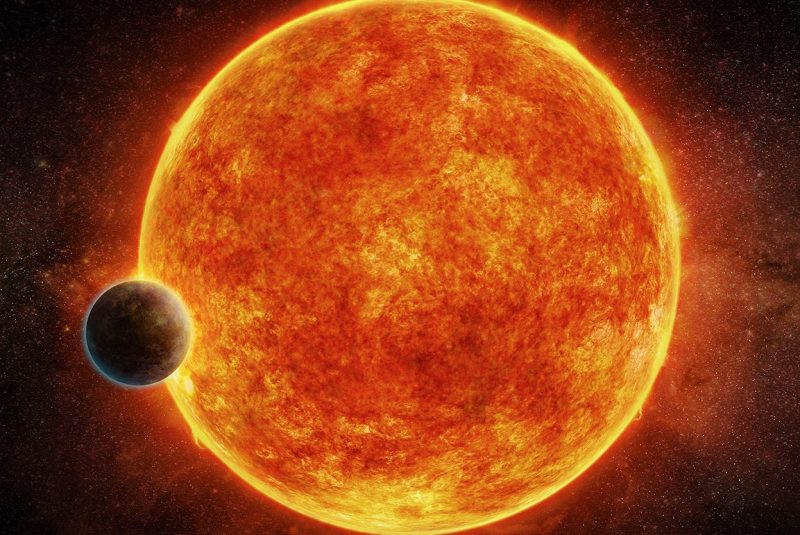
According to researchers at Uppsala University, the sun contains 55% more silver than previously estimated. The Sun, like most stars, is composed almost entirely of hydrogen and helium. Heavier elements, including carbon, iron, and silver, account for only 1.5% of its mass. Even in such small quantities, these elements are extremely valuable to astronomers because they preserve clues about the history and chemical evolution of the cosmos.
My note: I want to make it clear that this article is not intended to be a standalone scientific study. Through this blog, I hope to carefully share scientifically relevant information. If you’d like to explore this topic in greater depth, I invite you to refer to the links to the scientific research that I’m sharing here so you can analyze all the results.
2. Why is this study important?
Studying the composition of stars allows us to study the evolution of the Milky Way’s chemical composition. Researchers have developed a new model for studying chemical abundances, and its results are more accurate than those of previous models. The model used is the 3D non-LTE model. It was used for the first time to calculate the abundance in the Sun. This model is based on a three-dimensional simulation of the volume of the stellar atmosphere. Collisions between atoms and absorption may occur, resulting in the emission of photons (particles of light). Prior to this study, calculations of silver abundance were based on assumptions of one-dimensional (1D) atmospheres and local thermodynamic equilibrium (LTE). 1D atmospheres are simplified models in which certain conditions or properties—such as winds, air currents, or the transport of heat and moisture from one region to another—are neglected. LTE is an approximation that assumes that, at every depth, the atoms behave as if they were in perfect thermal equilibrium with their surroundings, neglecting the effects of radiation coming from other regions.
3. How did they do it?
A new Ag I model has been developed based on radiative and collisional data using the National Supercomputer Center at Linköping University. The Hartree-Fock method is applied and also inelastic hydrogen collision based on a combined asymptotic and free-electron model approach. The free-electron model, also known as the Sommerfeld model, is used to calculate collisions between Ag atoms and neutral H (hydrogen) atoms in the stellar atmosphere.
4. What are the results?

Photo from Ag I model atom and the 3D non-LTE solar silver abundance | Astronomy & Astrophysics (A&A). Grotrian diagrams for Ag I illustrating the model atom. The transitions highlighted in blue correspond to the two Ag I diagnostic lines analysed in this work (vacuum wavelengths). The horizontal dotted line marks the silver ionisation limit. The Grotrian diagram shows the possible transitions between the atom’s energy levels.
The silver abundance is log εAg = 1.15 ± 0.08 (uncertainty). This represents an increase of 0.19 compared to current values, with a significantly lower uncertainty than the current one (±0.25).
Bibliographic sources For more info Ag I model atom and the 3D non-LTE solar silver abundance | Astronomy & Astrophysics (A&A)
Thank you for reading

Leave a Reply